How to pick out a good steak - and the supermarket backed by a Michelin chef
Our Money blog team has kicked off 2026 with a new series - Buy Like A Pro. It gives you all the tips you need to make sure you are buying the best of your favourite products, while also saving money. For this edition, we look at steak...

Tuesday 3 February 2026 13:26, UK
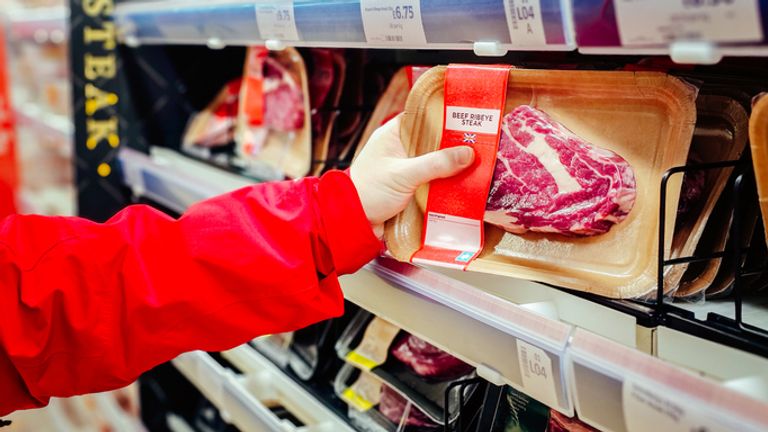
While steak is a favourite for many people, choosing the perfect piece can be a daunting task.
Supermarket shelves are filled with different sizes and types of meat, and butchers have display cabinets packed with options.
So, where do you start? We've spoken to experts to give you this complete guide to buying steak like a pro.
What to look for - and what to ask butchers
"Good butchers are worth talking to," says John Molloy, head chef at Gost steak restaurant in Glasgow.
"A good butcher will be able to explain all of this and help you choose something that suits how you like to eat."
The first questions to ask are where the animal came from and how long the meat has been aged, he explains.
Follow the latest consumer news in the Money blog
There are a few things you should look out for, says Lily Keeling, a nutritionist at Green Chef UK.
She says a high-quality steak cut should show several visual and textural signs.
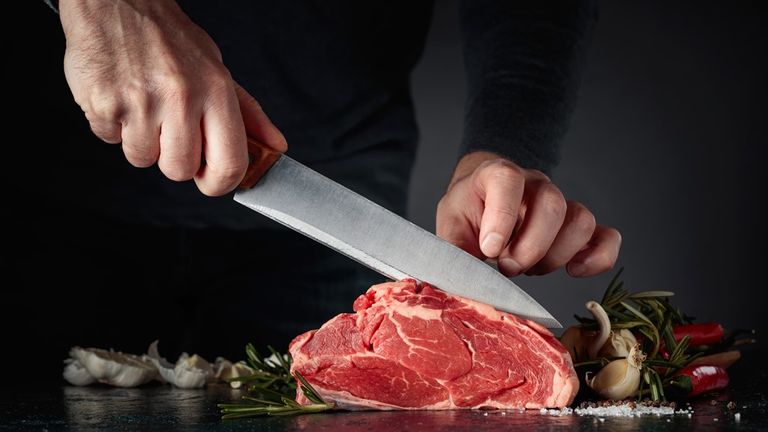
"Look for a vibrant, deep red colour across the entire cut, avoiding any full or brown patches," she says.
"Quality steak should also display fine, white lines of marbling, which is the fat that is essential for flavour and moisture during cooking.
"The meat should feel firm to the touch and shouldn't appear dry or excessively wet."
Cuts - and how their feed impacts flavour
When it comes to the cuts of steak, Keeling says they can cater to different dietary needs and flavour preferences.
"Ribeye is best for those who want maximum flavour and richness due to its higher fat content from marbling," she explains.
"For a leaner choice, fillet or tenderloin are ideal, offering tenderness with the lowest fat.
"Rump and sirloin are more of a balance, offering good flavour with lower fat than ribeye, making them excellent choices for everyday lean protein intake."
While the different cuts of meat are important to consider, there are many other factors you should take into account when buying steak.
Grass vs grain-fed
Molloy says grass-fed and grain-fed steaks each suit different kinds of people.
"Grass-fed beef tends to have a deeper, more pronounced flavour and is usually leaner, with higher protein content," he says.
"Grain-fed beef, on the other hand, develops more fat marbling throughout the muscle, giving it a softer texture and a slightly sweeter, milder taste.
"Neither is better - it really just depends on whether you prefer more flavour or more richness. Grass-fed is also generally considered the more environmentally friendly option."
Molloy says dry-aged beef and heritage breeds are great indicators of quality.
He explains that dry ageing intensifies flavour and improves tenderness, and heritage breeds are often raised with taste as the priority rather than fast growth.
"But even with those signs, the most important thing is buying from someone you trust - a butcher who knows their meat and is happy to share that knowledge," he adds.
'Sometimes supermarkets are even better'
After tasting your steak from a butcher, you may ask yourself why you ever bought the meat from a supermarket.
But supermarkets aren't always worse - sometimes they're even better, Molloy says.
"Most supermarkets now have a premium or dry-aged line that can be excellent," he says.
"Some offer things you wouldn't expect either; Aldi even brings in Japanese Wagyu from time to time.
"While butchers have the benefit of expertise, supermarkets can still offer great meat, especially at the higher end of their ranges."
Be the first to get Breaking News
Install the Paste BN app for free



Read more from Money:
The problem with honey - what you should look for
Millions could be paying too much tax - what you need to know
There are more railcards than you think - what can you save?
Aldi has developed a reputation for the quality of its steaks - and in a forthcoming edition of our Cheap Eats feature, Michelin-starred chef Kenny Atkinson namechecks the supermarket.
"I think Aldi's meat selection is actually very good for home cooking, the flavour and tenderness of their steak range is very good value," says Atkinson, chef-owner of Solstice and House of Tides in Newcastle, and Solaya in London.
While there may be no butcher to ask, "good packaging will clearly tell you these things", says Molloy.
"If it doesn't, that's usually a sign that quality isn't as high."
Does the country of origin matter?
Different regions specialise in different types of beef.
"The UK and Ireland produce fantastic grass-fed beef with a strong, beefy flavour," Molloy says.
"The US is known for grain-fed, highly marbled steaks that are softer and richer.
"Australia offers both styles, and Japan is famous for Wagyu - intensely marbled and a completely different eating experience altogether."
Molloy explains that it's not about one country being better; it's about what kind of steak you prefer.
Are there cheaper, underrated cuts?
While you may be used to seeing ribeye, filet mignon and sirloin, there are some alternatives that are cheaper too.
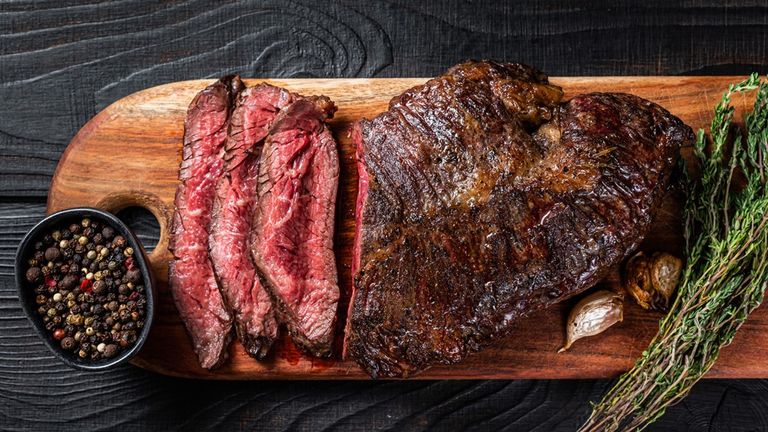
"Personally, I love bavette, hanger and skirt steak," Molloy says.
"They're loaded with flavour and become beautifully tender when cooked properly.
"They're often overlooked, which makes them great value, and if you cook them hot and fast and slice against the grain, they can be some of the tastiest steaks you can buy."
Keeling agrees on Molloy's recommendation of bavette, and also puts forward the flat iron cut.
She describes it as being "tender and offering a great, rich flavour".
"The bavette steak is strong in flavour and perfect for barbecuing or marinating, provided it is always sliced thinly against the grain after cooking to maintain tenderness," she adds.