Millions could be paying too much tax - here's what you need to know about tax codes
Around 31% of adults have paid the incorrect amount of tax at some point - with the average overpayment worth £689, according to Canada Life. Our Money blog team explains everything you need to know about tax codes and how to check if yours is correct.
Tuesday 20 January 2026 09:08, UK
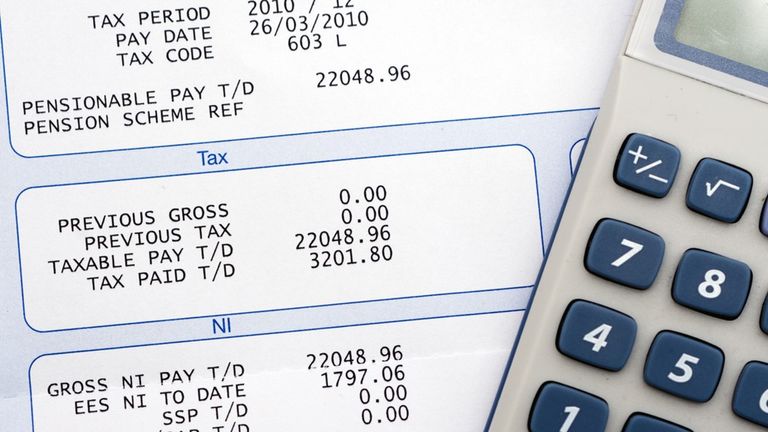
More than 5.6 million people overpaid tax in the 2023-24 financial year - and part of the problem being on the incorrect tax code.
Here we explain everything you need to know about the codes that determine how much money you pay to HMRC...
A tax code is a series of numbers and letters used by employers or pension providers to work out how much tax should be deducted from your pay or pension at source.
Anyone in employment or with a private pension will have one.
Making sense of the letters and numbers
The number shows the amount you can earn tax-free - although you need to add a zero to get the actual figure.
For example - the number 1257 means you can earn £12,570 a year tax-free.



The letters (which follow your tax code number) relate to your situation and how it alters your personal allowance.
For example, L means you are entitled to the tax-free personal allowance we outlined above. Therefore a tax code of 1257L (the most common tax code) means you are entitled to a personal allowance of £12,570 before any income tax is paid.
Here are what the other letters mean:
- T is similar to L in that if it follows numbers, you are entitled to that tax-free personal allowance. However, it also means HMRC will be taking a closer look at your tax affairs - usually the case if they are complicated;
- BR means you aren't entitled to any personal allowance (usually because it's a second job etc) and will pay a flat rate of 20% tax. This is the same for D0 but the rate is 40%, and D1 where the rate is 45%. SD2 is similar but only applicable in Scotland, where the top rate is 46%;
- K means your personal allowance has been eroded down to less than nothing, meaning the number after the K is actually a negative personal allowance;
- 0T means no personal allowance but you'll fall under the tax bands;
- NT simply means "no tax";
- M means your spouse or civil partner has transferred some of their personal allowance to you;
- N means you've transferred it to your spouse/civil partner;
- If you have an S or a C ahead of any of the other letters, that just means you're living in Scotland or Wales.
Read more:
Nearly six million people have overpaid tax
How to fight your council tax band
Out of a job and on benefits: Why Britain isn't working
What happens when they're wrong?
Millions of Britons could be paying too much tax due to tax code issues, new data from Canada Life shows.
A survey by the financial services provider found that 31% of adults have been on the wrong tax code at some point - with the average overpayment worth £689.
Over two-thirds of those surveyed didn't know how to claim back overpaid tax.
The survey also found that one in six UK adults did not know if they were on the correct tax code, and 39% were unaware of the meaning of the letters or numbers on their tax code.
However, an HMRC spokesperson said: "We don't recognise these figures. Tax codes are based on information provided by employers or pension providers.
"People can check their code quickly and easily online and update any details that may be affecting it."
Why would my tax code be wrong?
There are a number of reasons HMRC could have the wrong tax code for you, including:
- A change in job
- Having more than one source of income
- Retirement or having more than one pension
- Receiving employee benefits
- Starting your first job
How do I check my tax code?
You can check your tax code on your personal tax account online, or by looking at any payslip or via the HMRC app.
If you think it's wrong, you need to contact HMRC to tell them.
You can either phone 0300 200 3300, use their chat function or send them a letter.
Emergency codes
W1, M1 or X are usually found after a regular tax code (eg 1257L W1).
This usually only happens if there's a delay in HMRC receiving details about a change in your circumstances, for example if you've just started a new job.