US interest rates hold steady despite Trump
The Federal Reserve members are upbeat about the state of the economy in the coming months but still plan rate rises in future.
Wednesday 1 February 2017 22:26, UK
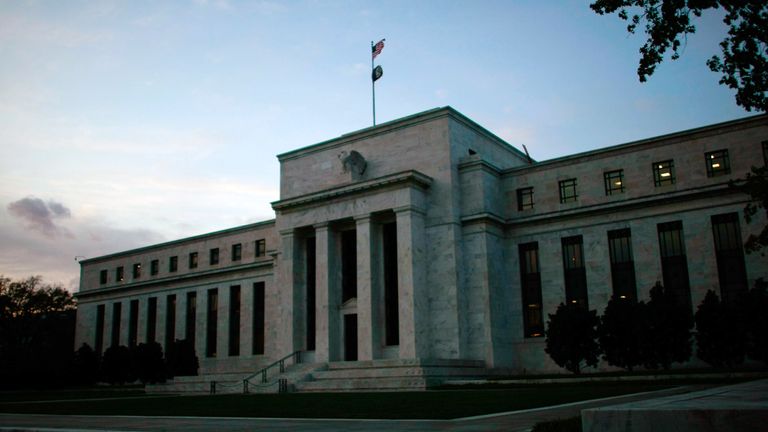
The Federal Reserve has chosen to keep interest rates in the United States unchanged in its first decision since Donald Trump was elected President.
A statement released on Wednesday, alongside the minutes from its most recent meeting, struck an optimistic tone, noting that the US job market has continued to strengthen and inflation in the country is edging up towards its 2% target.
But it signalled that more time was needed to monitor the economy, and said it still intended to raise rates gradually in the coming months.
US officials previously said that the pace of rate hikes may have to be increased if Donald Trump chooses to enact economic policies which could push inflation upwards.
The Fed increased interest rates by 0.25% in December, only the second time it had done so since they were cut to near-zero during the 2008 financial crisis.
Federal Reserve chair Janet Yellen has indicated that she expects to raise them again a 'few' times before 2019.
Analysts had anticipated that rates would be held steady this month as the Federal Reserve waits to see how Mr Trump's policy shake-up will affect the US economy, and there was little reaction from markets to the news.


But some economists warned that with unemployment low and inflation already creeping up, government decisions could force the Fed to act sooner than expected.
"The Fed could find itself in a quagmire in the next couple of years if fiscal reform leads to an overheating economy," said economist Mickey Levy of Berenberg Capital Markets.
Mr Trump has criticised Ms Yellen in the past for keeping rates low for too long following the economic crisis, but according to Jason Schenker of Prestige Economics, it will be some time before any of his policies could force officials to change their current plans.
"It will take time before a full fiscal plan can be approved - and even longer before it could impact the US economy," he said.