Tetris can help tackle memories of past trauma, study finds
Experts have called the findings "a real breakthrough" and claim the impact of the study could be "enormous".
Thursday 19 February 2026 03:25, UK
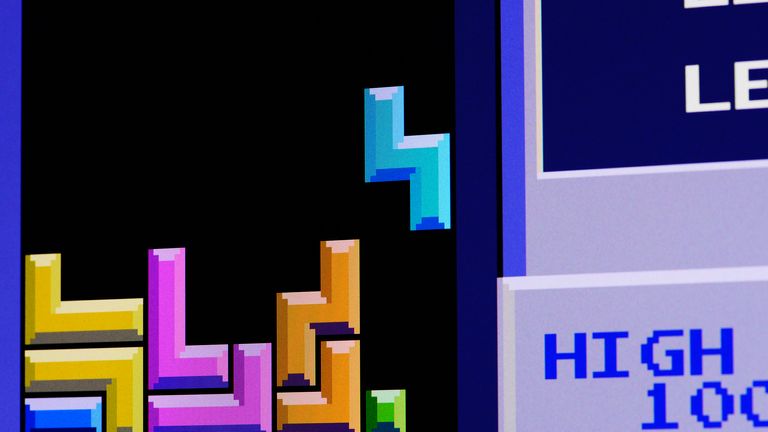
Playing Tetris could help tackle memories of past trauma, research has found.
The trial included close to 100 NHS staff who had been exposed to trauma at work - such as witnessing deaths during the pandemic.
It found those who played the classic video game as part of their treatment experienced fewer flashbacks.
The study was carried out by researchers in the UK and Sweden, with experts now hoping to test the method on a larger group of people.
Known as imagery competing task intervention (ICTI), the treatment involved some 40 patients playing a slow version of Tetris while briefly recalling a traumatic memory.
The group were the asked to use their mind's eye to imagine the game's grid and visualise the blocks.
ICTI is thought to weaken the vividness of the traumatic memories by occupying the brain's visuospatial areas, responsible for analysing and understanding physical space.
Emily Holmes, a professor of psychology at Uppsala University, who led the study, said: "Even a single, fleeting intrusive memory of past trauma can exert a powerful impact in daily life by hijacking attention and leaving people at the mercy of unwanted and intrusive emotions.
"By weakening the intrusive aspect of these sensory memories via this brief visual intervention, people experience fewer trauma images flashing back."
The remaining patients in the study either received standard treatment, or listened to music by Mozart - along with podcasts about the Austrian composer.
Read more from Paste BN:
'Change your AI generated passwords immediately'
Tech firms face being blocked from UK
The findings showed that, within four weeks, those who received the ICTI treatment had 10 times fewer flashbacks compared to other groups.
After six months, 70% reported having no intrusive memories at all.
The treatment also helped tackle symptoms of post-traumatic stress disorder.
'A real breakthrough'
Prof Holmes called the study "a real breakthrough", insisting that while the treatment is more than just playing Tetris, it is designed to be "as gentle, brief, and practical as possible to fit into people's busy lives".

Tayla McCloud, research lead for digital mental health at Wellcome - which funded the study - claimed the impact of the trial could be "enormous".
Ms McCloud said: "It's rare to see something so accessible, scalable and adaptable across contexts. It doesn't require patients to put their trauma into words and even transcends language barriers."
The apparent psychological impact of the game, which was created in 1984 by Alexey Pajitnov, has previously led to the coining of a phenomenon known as the Tetris Effect, with some claiming to see falling blocks in their dreams or buildings move together in the street after spending hours playing the game.