'Simply a miracle': Baby boy born from dead donor womb transplant in UK first
Hugo Powell was delivered by caesarean section in London after his mother underwent transplant surgery in 2024. She said she was the "happiest I've ever been in my life".
Tuesday 24 February 2026 09:58, UK
A baby boy has become the first child in Britain to be born to a mother with a womb transplanted from a deceased donor.
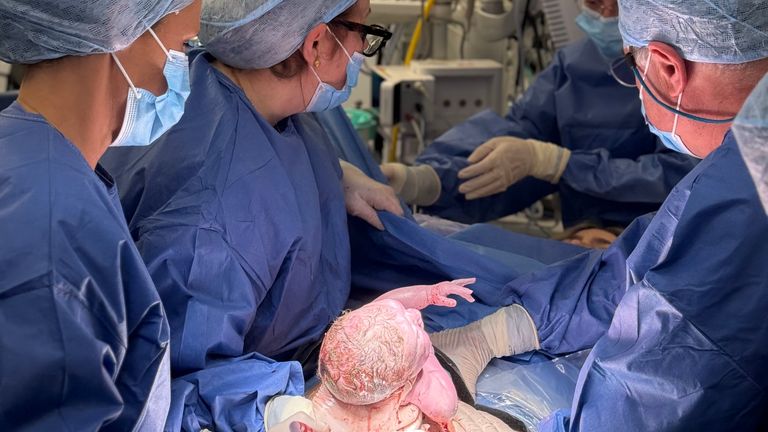
Hugo Powell was delivered by caesarean section in December, weighing 6lb 13oz (3.1kg), at the Queen Charlotte's and Chelsea Hospital, part of Imperial College Healthcare NHS Trust, in London.
Only two other such cases have been reported elsewhere in Europe, while a baby was born from a womb transplanted from a living donor for the first time in the UK last year.
Hugo's mother, Grace Bell, an IT programme manager, was born with Mayer-Rokitansky-Kuster-Hauser (MRKH), a rare condition characterised by an underdeveloped or missing womb.
"It's simply a miracle. I never, ever thought that this would be possible," Ms Bell said. "I'm the happiest I've ever been in my life."
She added: "When I was 16, I was told that this would never be possible."
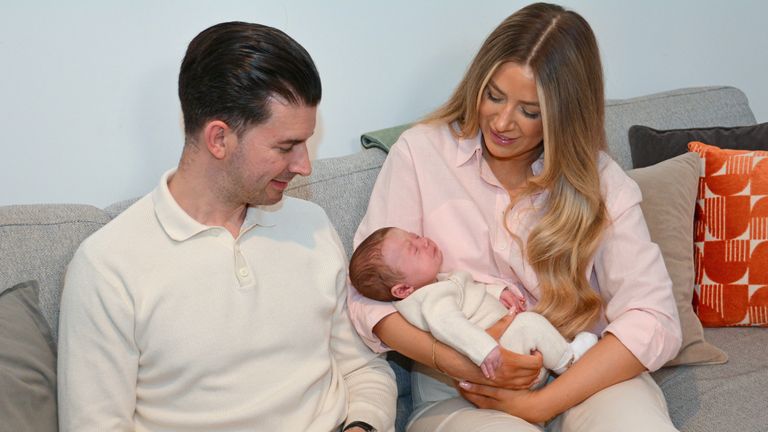
Hugo's father, Steve Powell, works in finance, and the couple, aged in their 30s, live in southern England.
Ms Bell said she remembered holding Mr Powell's hand during the birth, and trying to peep over the curtain before Hugo was placed in her arms.
Reflecting on the birth, Mr Powell said: "When he came over the curtain, it was just sort of overwhelming emotions. I felt like I wanted to cry, but couldn't.
"From where we started - first meeting - to where we are today, with Hugo, is nothing short of a miracle after everything we've been through.
"It just felt quite unreal at the time, because this has been a long journey for us both."
Speaking on Mornings with Ridge and Frost, Ms Bell said: "About 16 years ago, I was diagnosed with MRKH. It was a tough journey. I must admit, a very sad journey."
But she added: "I remember the story of the first womb transplant in Sweden, many years ago now, and following that story intently.
"I still can't believe that I'm here today and I've gone through this. It's just amazing."
'The biggest gift'
Ms Bell, who broke down in tears when she recalled discovering she was pregnant, said she thinks of her womb donor every day and hopes her family "find some peace in knowing their daughter gave me the biggest gift, the gift of life".
"There are no words to say thank you enough to my donor and her family," she said.
"Their kindness and selflessness to a complete stranger is the reason I have been able to fulfil my lifelong dream of being a mum.
"I hope they know that my child will always know of their incredible gift, and the miracle that brought him into this world."
Read more science and technology news:
Houston, NASA's next moon mission has a problem
How tampon could detect early signs of cancer
Five other organs from the donor were transplanted into four people, saving the lives of others.
The donor's parents said: "Losing our daughter has shattered our world in ways we can barely put into words.
"Yet even in this unimaginable pain, we've found a small measure of solace in knowing that her final act, her choice, was one of pure generosity."
After being told as a teenager that she had no womb, Ms Bell said she remembers "going into the hospital toilets and uncontrollably crying".
She told Mr Powell about her diagnosis "straight away" when they met. The couple had decided to pursue surrogacy before they became involved in the womb transplant programme.
Hugo's name honours charity chief
The couple decided to give Hugo the middle name Richard, after Professor Richard Smith, clinical lead of the charity Womb Transplant UK.
Hugo was also given the middle name Norman, after Ms Bell's grandfather.
Professor Smith, who was present at the birth, said holding baby Hugo and hearing he would be given his name "brought a tear to my eye".
"That did make me cry, straight up. It's been quite emotional, very emotional," he said.
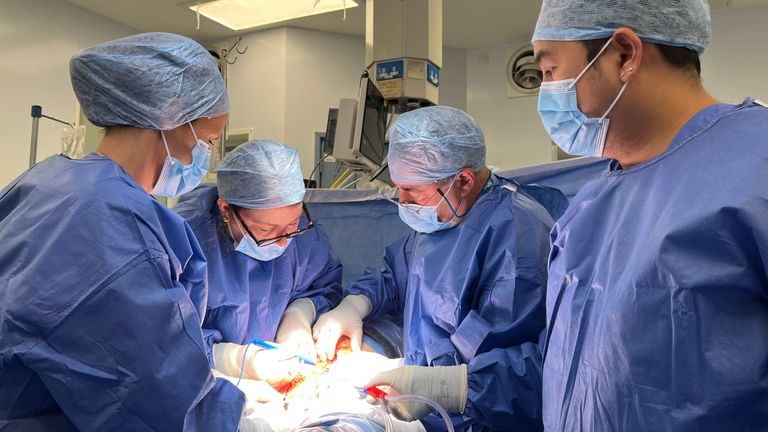
Ms Bell underwent the seven-hour womb transplant in 2024, before beginning fertility treatment several months later.
The couple may decide to have a second baby, after which surgeons will remove the transplanted womb.
If the transplanted organ is not removed, Ms Bell would have to stay on immunosuppressant drugs.
Be the first to get Breaking News
Install the Paste BN app for free



Wombs from deceased donors are not covered by the normal consent for organ donation, nor by joining the donor register and their families must give specific permission after they have agreed to donate other organs.
It is estimated about 25 to 30 babies have been born from deceased womb donations globally.
Looking back on the process with Ms Bell at his side Mr Powell called her an "inspiration".
He said: "The story, particularly for women, gives them hope in the same circumstances as Grace, with MRKH.
"For my part, it's more just been the emotional support. We are in it together - and making sure Grace didn't feel alone in this whole process."
Mr Powell added: "I appreciate she's the one that had gone through the transplant, put a body on the line and got to the point of where we are today."