On the streets of Venezuela's capital as US threatens military intervention

Monday 22 December 2025 09:46, UK
Venezuela appears to be at a crossroads with the government under pressure from Donald Trump to give up power - backed up with threats of military intervention.
The US says it is targeting Venezuela's drug trafficking network that is - it claims - a government-run narco cartel with the country's nominal president, Nicolas Maduro, at its head.
We have travelled to Caracas to find out what life is like as the pressure mounts.
We knew that filming and reporting anything that could be construed as critical of the government is fraught with danger.
Local journalists find it difficult, and as foreigners, openly filming is even harder, so we have restricted our presence on the streets - filming indoors with people we trust or in cars as we drove around, and filming discreetly at a pro-government rally.
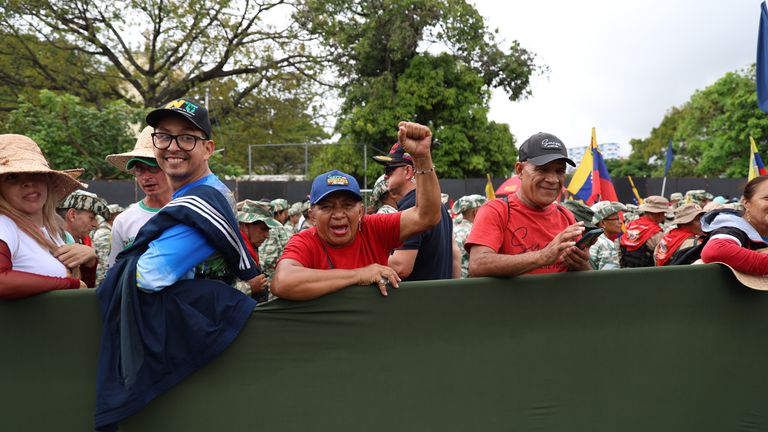
During our stay in Venezuela, we have been meeting both government supporters and opposition supporters - and gauging the thoughts of the ordinary people struggling to make a living in a country whose economy is in critical decline.
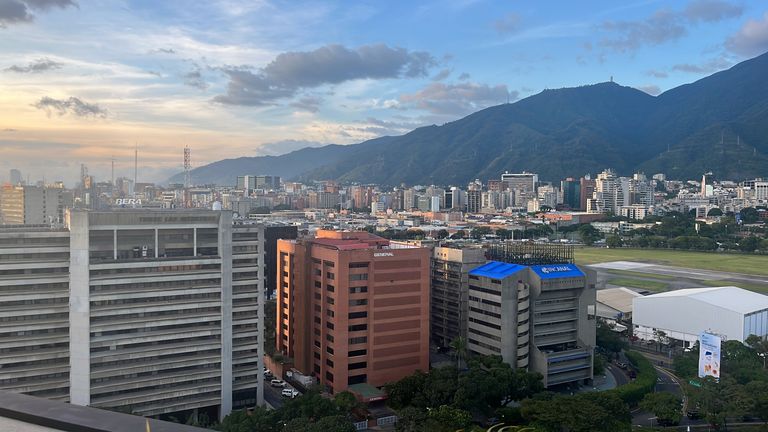
Caracas, often described as the country's beautiful but neglected capital city, stretches along a valley floor, towered over by the magnificent 8,000-foot-tall Avila mountain.
Beyond the mountain lies the Caribbean, where the United States military, with a third of its navy, has stationed itself.
The city is arguably at the centre of everything in Venezuela, from commerce to culture, though it is a lot shabbier since its heyday in the 1970s, funded by its oil boom.
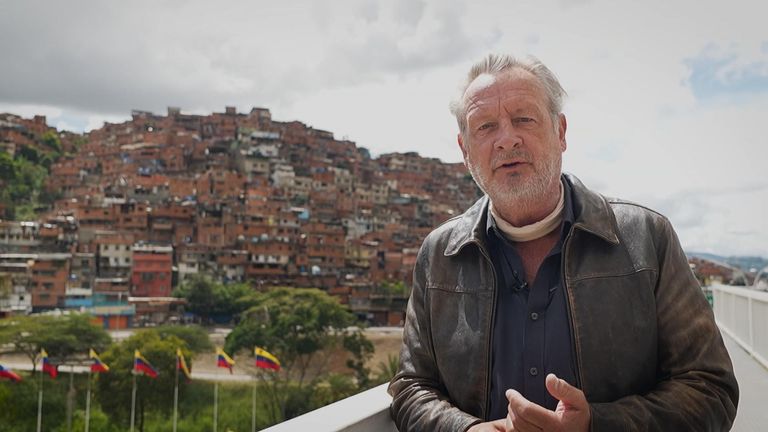
Venezuela still has the world's largest known reserves of oil, but mismanagement and corruption has left most of the population living in poverty.
On the streets, everything seems like business as usual - markets and shops are busy, and people are going about their day-to-day, doing their Christmas shopping.
Many don't believe that all this talk of war is even a "thing", others say even if it is, they don't have time to worry about it, they need to concentrate on surviving economically.

How to deal with Trump's America
Maduro is undoubtedly under pressure from the US, but he's doing his best to carry on as normal.
We watched him dancing and singing with the crowds at one of his latest rallies.
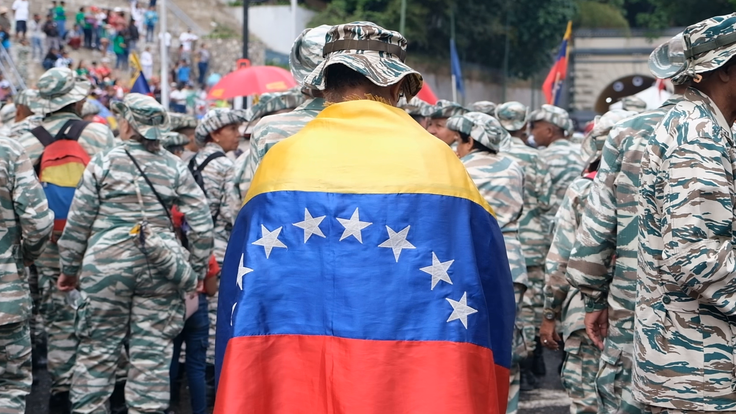
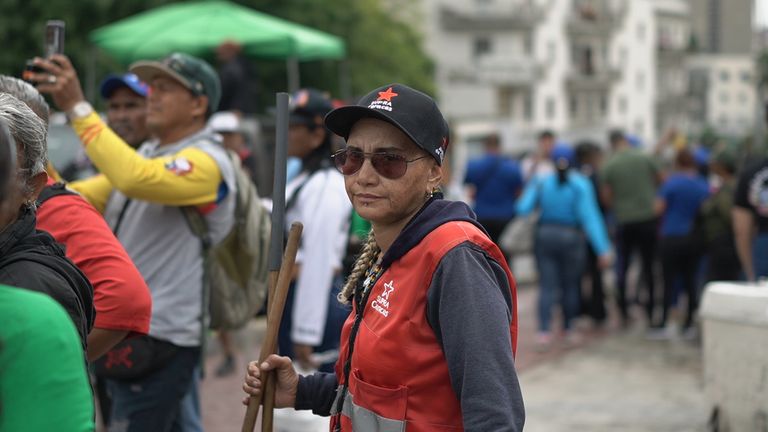
His supporters were largely bussed into this rally in Caracas; we saw the parked buses waiting to take them home. They are made up of community groups, militias, former soldiers, and government workers.
They told us that the threats and demands for change by the US should be faced down by Venezuelans.
"They will always try to lay their hands on Venezuela's riches, but they won't get away with it, because here we have strong people who are ready to put up a fight, and we are brave women and men here, willing to give it all for our homeland," one supporter told us.
Read more:
US in 'active pursuit' of third vessel off Venezuelan coast
Maduro's 'narco nephews' hit with sanctions
Venezuela opposition leader named Nobel winner
Another said it's about the oil and minerals - that that's America's ultimate ambition.
"We know that Venezuela has minerals, oil wealth, and the best weather is in Venezuela; we know they want to come for us, but we're getting better organised all the time," she said.
Others thought the ongoing talks might still resolve the situation.
"Do they want to come by force? Let them, but if they want to come in peace, and talk to us, the president is there, let him [Trump] talk to them."
It was a rainy day, but the numbers were really quite small at this rally.
The reason for this, Maduro's opponents and the US argue, is that he has lost the support of the people, and he rigged the last election results to stay in power.
It is a widely held view across the international community.
Problems facing Venezuela's people
Maduro rails against the US and talks about the external threat, but in reality it's the internal threat that is his biggest problem.
When he came into power, he promised to continue with the vision of a socialist state that would look after everyone, but many Venezuelans now live in poverty, with no work and no income.
Add to that a collapsed health service, education sector, industrial base, and corrupted legal and political institutions.
More than a quarter of the population of 29 million have left.
Of the ones who remain, vast numbers live in social housing, or in barrios - cramped neighbourhoods built into the sides of mountains.
Some residents, like Orlando, are disillusioned.
The 71-year-old lives in abject poverty. He worked as a labourer, but an injury means he can't work at all now, so he's dependent on help from the community.
There are no social services to look after him, and he is completely on his own. His family has left the country.
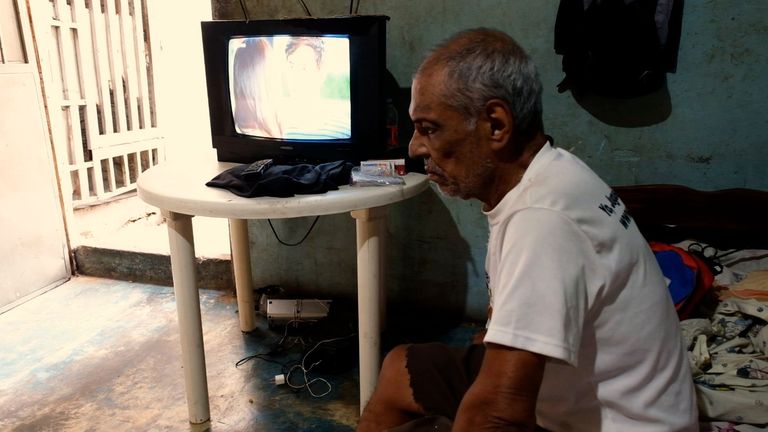
All Orlando has are his memories of Venezuela's past.
"It was wonderful, you made lots of money," he tells me, sitting on the bed in his house with nothing in it.
"I used to make 90 bolivares per day, and you could afford life, cheap food, and there were plenty of jobs."
He paused. "You'd be happy, and have money. Now… there is no life."
These barrios should be a stalwart for Venezuela's socialist revolution and government.
But the 2024 election results revealed an astonishing collapse in support for the government in these places, among those who actually cast a vote.
Some decided not to vote for fear of retribution by government supporters, while others thought the vote would not be honoured anyway.
A police state
While nobody knows what's going to happen next, the state security services are on high alert.
We drove past the presidential palace of Mira Flores in Caracas, and it is heavily guarded.
Nobody knows if Maduro is even there, or where he sleeps each night. The rumour here is that he stays in a different location each night for fear of being targeted.
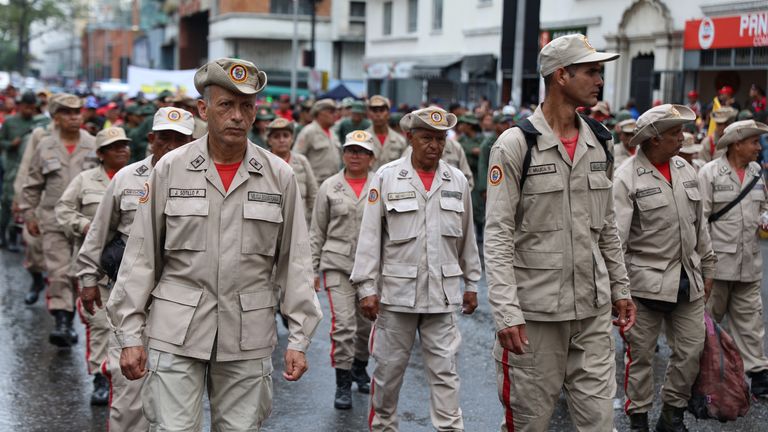
Venezuela is a police state, where checkpoints and arbitrary detentions are a constant.
It's how the government stays in power, stamping out opposition.
Since 2014, there have been more than 18,000 politically motivated arrests, and the detentions increased significantly after last year's elections, when the opposition was on course for a landslide win.
And the last time the opposition were able to gather for a rally of their own was in January, when they came to support the figurehead of the opposition, Maria Corina Machado, the latest recipient of the Nobel Peace Prize.
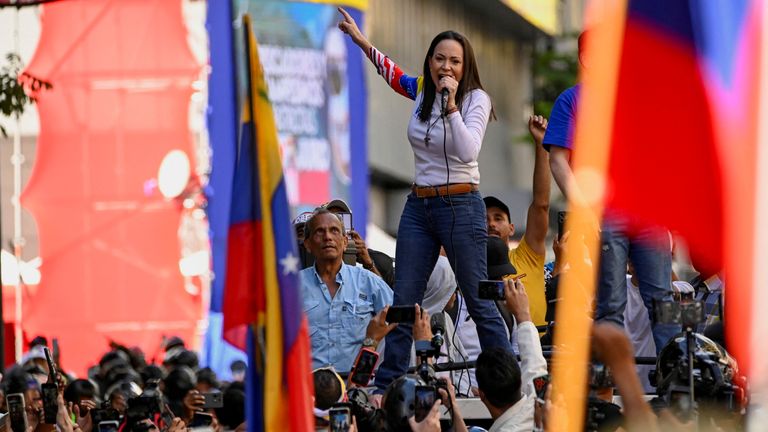
That protest led to a wave of politically motivated detentions by the government.
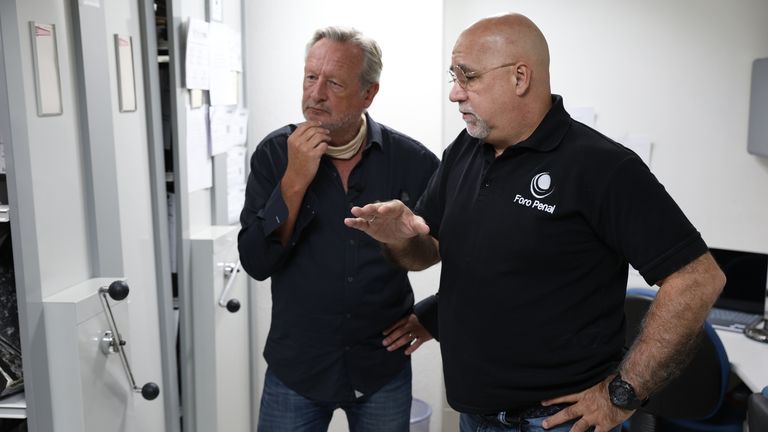
At the office for Foro Penal, a non-governmental organisation that defends those who have been arrested for their political beliefs and affiliations, I was shown the cabinets full of files.
The sheer number of cases on their books is frightening - state-organised mass suppression of all opposition.
Be the first to get Breaking News
Install the Paste BN app for free



Lawyer Gonzalo Himiob says it's only getting worse. More worryingly, the majority of arrests since 2024 are for "terrorism".
"This is a very clear manoeuvre from the government in order to establish this narrative that everybody that is against them or protest against the government is a terrorist," he tells me.
He says the government intentionally locks up opponents who can bring people to the streets to protest.
"In this case, it is very clear that they want to neutralise these people and they neutralise them using the criminal process in order to keep them in jail and not on the streets, you know, talking to the people," he says.
He goes on to describe the detentions of those who demonstrated at protests.
"They are in jail because the government wants to send a very clear message to the people that participate in a demonstration, in a protest against the government, you are likely to be arrested, and we can do with you whatever we want."
Himiob says the government detains family members of those they are looking for if they cannot find them.
"In some cases, we have whole families in jail," he says.
There is a veneer of normality to life in Venezuela, but it is a veneer.
People are genuinely scared of stepping out of line, and of being arrested and disappeared by the security services.

We also got the sense that barely anyone but the most optimistic believe anything will change.
They say they are exhausted by making ends meet, year after year - forever watched over by a state whose stranglehold on dissent is, if anything, getting more determined, as it clings on to power.