Hunting drug gangs on Colombia-Venezuela border


Wednesday 24 December 2025 05:32, UK
"The only thing I ask for is quiet," the heavily armed and masked Colombian troop commander whispers.
"They have drones, it's dangerous," he says, before waving us forward as we began a night mission into the heart of cartel gang territory right on the border between Colombia and Venezuela.
We're in Cucuta, an important transit hub between the two countries for both legal and illegal commodities - in particular guns and cocaine.
This city is at the heart of the war on Latin American drug gangs launched by US President Donald Trump, mainly because of its geographical location.
He has criticised Colombia for its dominant position as one of the world's largest cocaine producers - and Venezuela for being a major shipping point for drugs across the world and, the president claims, specifically to the US.
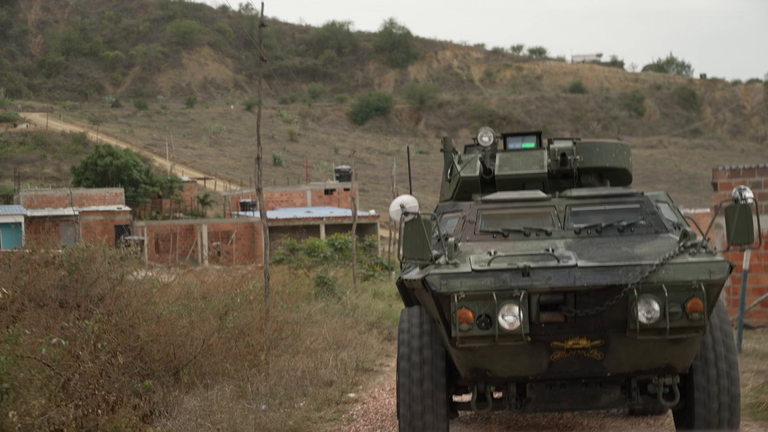
The soldiers we're with are from the Mechanised Cavalry Regiment of the Colombian Army, but we are on foot and the handful of troops pan out as we enter the darkness of the border slums.
They have a tip off that a shipment of weapons and possibly drugs are on the move between the two countries.
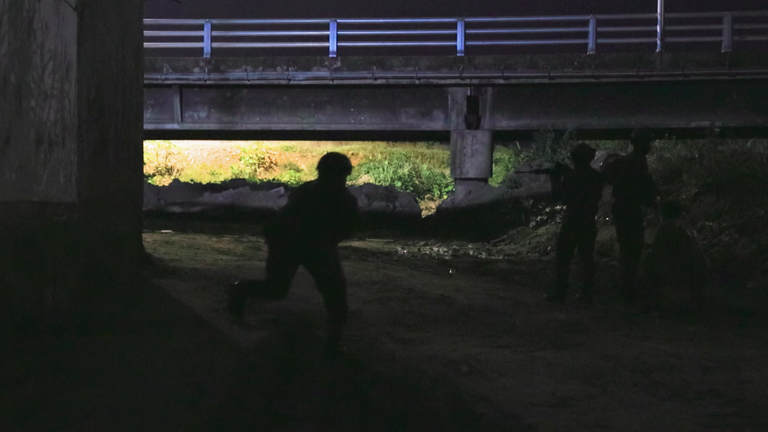
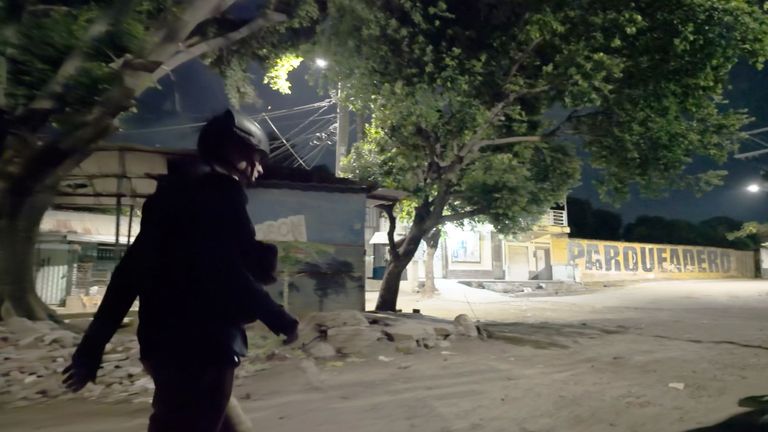
There are occasional streetlights but beneath the thunderous skies it's extremely dark and most of the houses here are abandoned as civilians have left.
The only sign of any life is of dogs barking as we pass them by, spooked by our presence.
The soldiers tell us to be careful, not to get too close to the houses because cartel gunmen sometimes use them to hide in and shoot from as the army enter.
If there is any movement here, the soldiers assume it is gang-related.
We make our way through the houses and towards the river dividing Colombia and Venezuela.
About 50 metres away the soldiers spot torchlights and instinctively take cover, telling us to do the same.
After a few tense minutes the lights disappear and the soldiers move on following the advice of an informant, who had crossed into Venezuela and returned saying he couldn't see anything.
We make our way back to the vehicles the same way we came in, past the abandoned houses and barking dogs.
'The war has changed'
The commander, who can't be named, says the information they got was either wrong, or the gang members had already left, or they abandoned their plans altogether.
"It's hard because sometimes we go to find weapons and maybe find drugs or explosives, or maybe we found enemies, in Colombia the war has changed, sometimes we found one thing and then find a lot of things, or maybe in this case we have found nothing in this moment," he tells me.
They found nothing on this occasion, but they do often find a lot. This unit has seized six tonnes of cocaine so far this year.
They share videos with us, showing some of those raids. And their pictures are extraordinary.
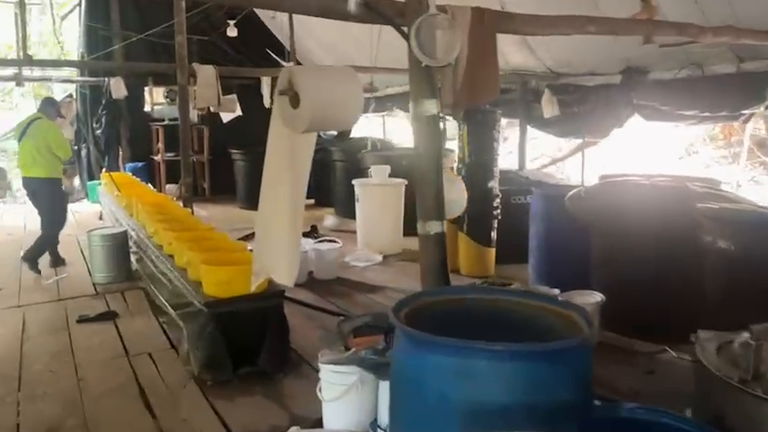
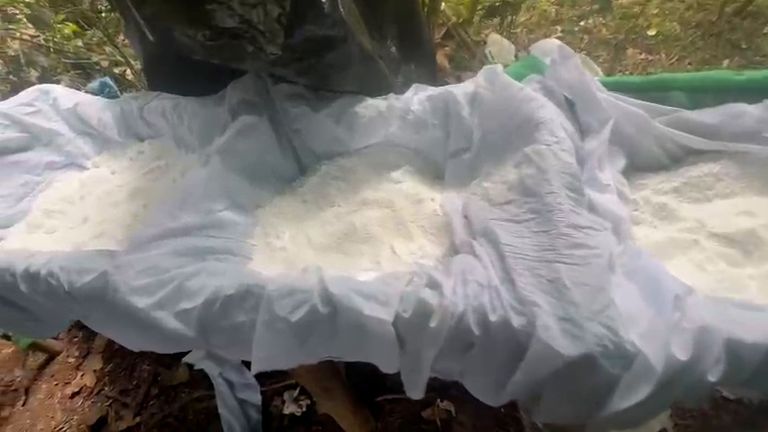
I've seen many drugs labs in Latin America before, but this is on another scale. The videos show the soldiers raiding cocaine labs in the jungle, where production of the drug is taking place on an industrial scale.
The video also shows huge drums of ingredients that are part of the cocaine-making process and microwaves with bricks of cocaine still in place.
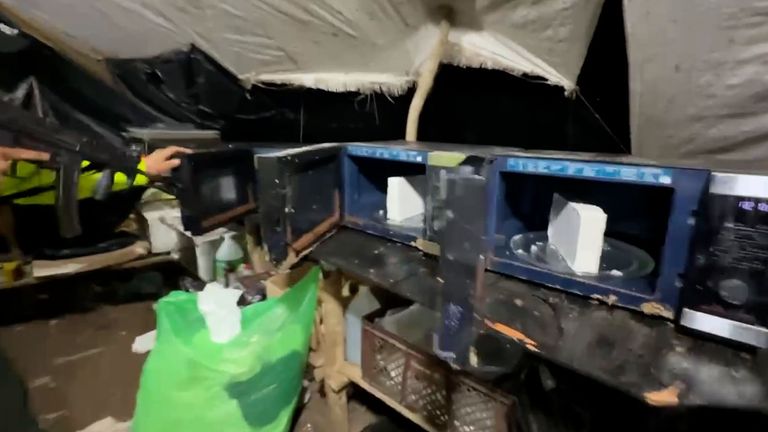
The lab was clearly abandoned just before the army arrived, and hundreds of thousands of dollars' worth of the cocaine has been left behind.
There's shovel loads of it waiting to be made into kilo blocks for export around the world and to arguably the most lucrative market of all - the US.
Growing terror group threat
Lieutenant Colonel Juan Camilo Mazo is in charge of this part of the border with Venezuela. He is commander of Cavalry Group 5, with the Colombian National Army.
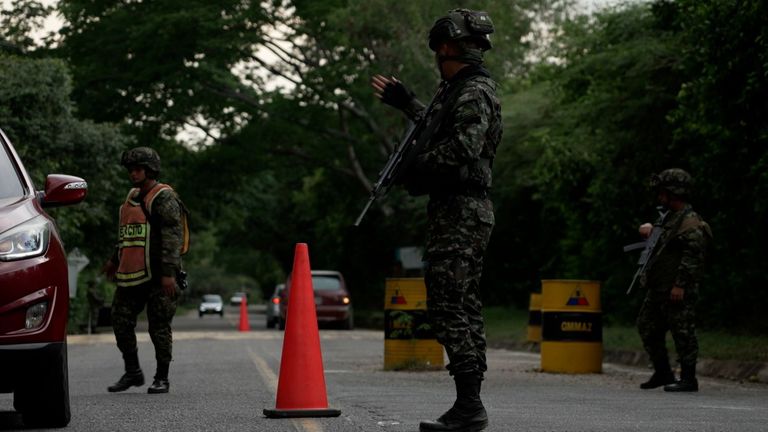
His soldiers are ones leading the fight against the narco gangs and terror groups that move between Venezuela and Colombia. I joined him at the vehicle checkpoints along the borderline that are the first and most basic part of that fight against drugs.

He tells me they find drugs and weapons during these car searches and they're a valuable part of their operations.
He's charismatic and clearly committed to his work, but he has a challenging task. Not only does he have to deal with well-organised drug cartels, but also with the growing threat of terror groups working in cahoots with the narcos.
Apart from being a long border, it's also porous, and for much of it there is no fence.
Lt. Colonel Mazo takes us to another spot along the borderline; it's tense as his soldiers fan out to guard us.
"I've been involved in a shootout here before," he says. "It's very dangerous, we can only stay a few minutes."
Border control 'very difficult'
The colonel points that we are just a footstep from the border, but you'd never know it - it just looks like a field. And that's part of the problem he and his men face.
"It's very difficult because the border line is very big, it's very big, it is very open, control is very difficult, the way against the drug traffickers is the interjects and the control procedures, and different operations…"
Intelligence gathering is essential to their operations on such an open border. Without any information, they find it incredibly difficult to find anyone or anything.
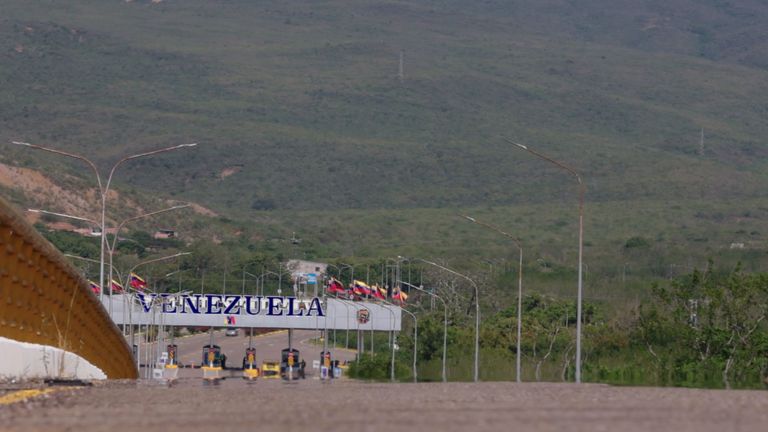
The flow of traffic between Colombia and Venezuela is absolutely constant, at the legal crossing and the informal ones.
The army make the point that hundreds of thousands of people a week cross this frontier all the time.
We saw that for ourselves - people and goods criss-cross continuously and many live and work in the different countries.
We are told by the colonel that there are at least 50 illegal crossing points in his sector, which makes policing it - and stopping the trafficking of drugs - extremely hard.
But at least Colombia can demonstrate it really is trying to do something about the problem.
It seems Venezuela cannot and that could have serious consequences for its leadership - and indeed the country.