Ex-Catalan president Puigdemont faces further wait to learn fate over extradition charges
Spain wants to bring the former president back to Madrid to face charges of rebellion and sedition over the independence vote.
Friday 17 November 2017 16:01, UK
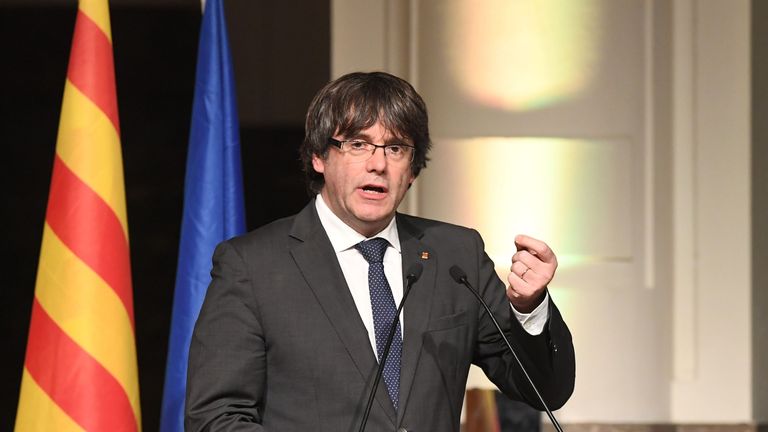
Ousted Catalan president Carles Puigdemont will not find out whether he will face extradition until next month after a Brussels court delayed the hearing.
The former leader appeared in court on Friday, only to be told by the judge in Brussels to return on 4 December, when the hearing will take place.
His lawyer, Paul Bekaert, said in a short statement that no decision was taken, but they would return next month.
His court appearance came as Spain and Belgium held talks in Sweden to discuss bilateral relations.
Mr Puigdemont and four former ministers deny charges of rebellion and sedition, and fled to Brussels after their parliament was dissolved by Spain in the wake of the bid for independence by Catalonia.
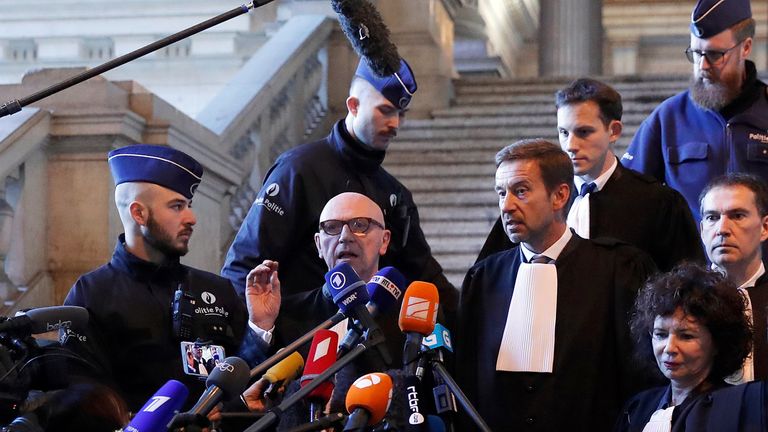
During talks between Spain and Belgium's leaders, Belgian Prime Minister Charles Michel said he could not intervene in Spain's request, but would leave the extradition decision to the independent judiciary.
Spain's interior ministry has sent information to the Belgian prosecutor detailing the jail conditions for Mr Puigdemont should he be returned to the country for trial.



The ministry has confirmed they will have access to their lawyers.
:: Disputed Catalan President Carles Puigdemont: Spain has 'damaged democracy'
:: How the Catalonia crisis has impacted the region's business community
When it happens, the extradition hearing is expected to be held behind closed doors, as prosecutors and lawyers for the separatists make the first arguments in what could become a lengthy legal battle.
Both sides are expected to appeal if they lose.
The judge was expected to give the initial judgement in eight to 10 days after the hearing.
Michele Hirsch, a lawyer for two of the former ministers, said earlier: "We are going to ask the Belgian judge to respect fundamental EU rights.
"The act of organising a referendum is not a matter for criminal law. It is clearly a political opinion that is being targeted, and the peaceful and democratic execution of a series of events linked to that opinion."