COVID schemes' fraud and error cost taxpayers £11bn
Fraud and error in pandemic support programmes like furlough and Eat Out to Help Out cost taxpayers enough to fund free school meals for 2.7 million eligible children for eight years.

Tuesday 9 December 2025 14:02, UK
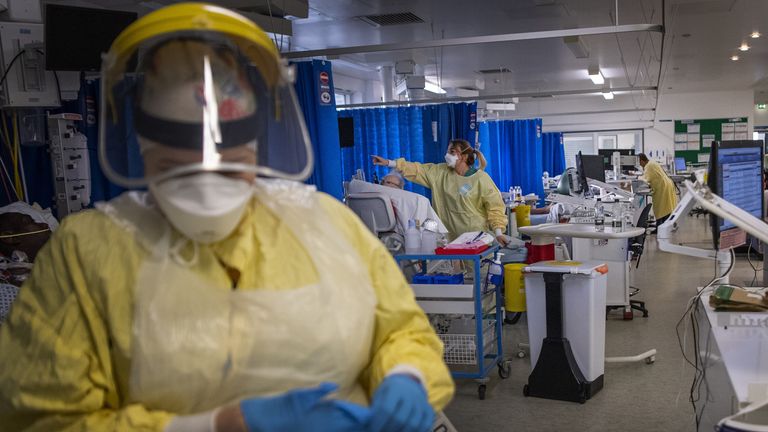
COVID-19 fraud and error cost the taxpayer nearly £11bn, a government watchdog has found.
Pandemic support programmes such as furlough, bounce-back loans, and Eat Out to Help Out led to £10.9bn in fraud and error, the COVID-19 Counter-Fraud Commissioner Tom Hayhoe's final report has concluded.
The government said the sum is enough to fund daily free school meals for the UK's 2.7 million eligible children for eight years.
Money blog: mortgage rates 'will fall below 3.5% this year' in price war
Weak accountability, bad quality data and poor contracting were identified as the primary causes of the loss.
Of the figure £1.8bn has been recovered, though "much" of the shortfall is now "beyond recovery", the report said.
There remain areas, however, where investing to recover sums is "worthwhile" and should continue, it continued.


Fraud risks were increased due to the design of the schemes and the absence of fraud expertise, it read.
Government departments generally worked independently and designed schemes from scratch, which led to a "high degree of novelty" in the design and introduced greater fraud risk.
This was especially the case as cross-government fraud expertise was "often not brought in" to advise on risk mitigation.
Procurement of personal protective equipment (PPE) involved measures which "invited mistrust, opportunism and profiteering".
Lack of government data to target economic support made it "easy" for fraudsters to claim under more than one scheme and secure dual funding, the report said.
Prevention
Measures to protect against fraud are said to be "inadequate" in the report.
Fraud prevention is "insufficiently embedded" in thinking and practice across government, it added.
Activity to counter fraud and recover funds has "varied significantly" across government departments.
This reflects differences in fraud exposure, in relationships to the stakeholders supported, and in the "commitment, capability and investment" to counter fraud. "Some departments" were slow to step up work to recoup funds.
What next?
Among the four lessons Mr Hayhoe's report recommends the Treasury has been told it should establish a "scrutiny panel" of senior officials across government with external members and chaired by a minister to review implementation of recommendations at six-month intervals for "at least" two years.
This has been suggested as lessons are "often not learned and recommendations not implemented ".
Be the first to get Breaking News
Install the Paste BN app for free



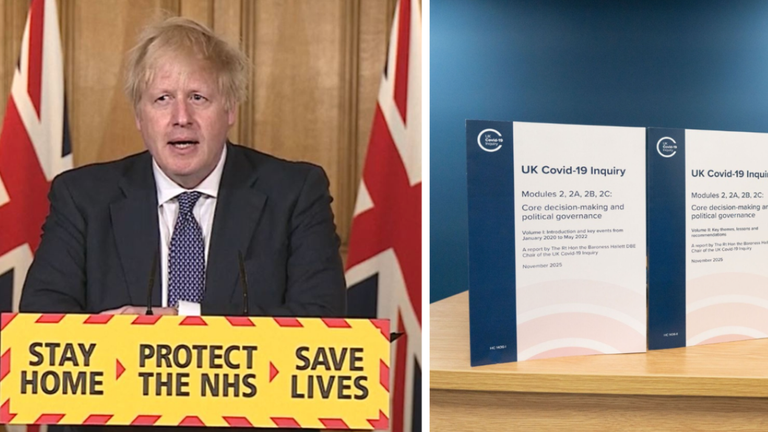
The work is separate from the COVID-19 inquiry, which was set up to scrutinise the decisions made around the virus and the impact they had on day-to-day life.