Chavez's Successor Will Be No 'El Comandante'
Venezuela faces a snap election to choose Hugo Chavez's successor - but whoever that is will be no match for 'El Comandante'.

Wednesday 6 March 2013 11:11, UK
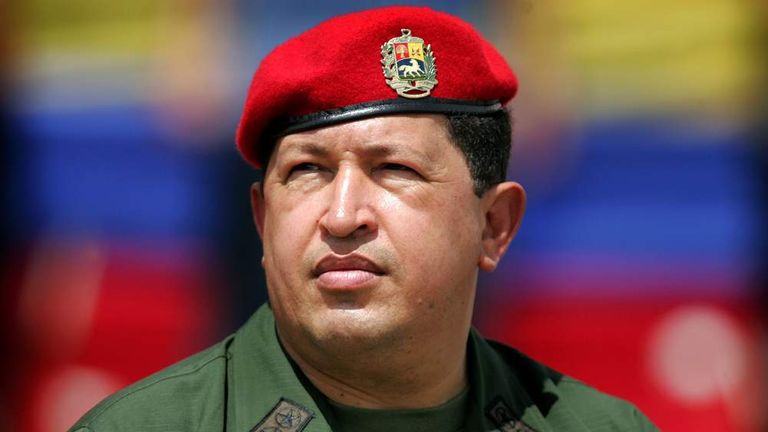
Whatever the name of the next Venezuelan president is, his biggest problem will be that he is not called Hugo Chavez.
That problem will compound his ability to deal with the mountain of problems piling up in what should be a wealthy country, but in which there are power cuts, food shortages, and a crumbling infrastructure.
"El Comandante", as the fiery socialist Chavez was sometimes known, ruled one of the world's largest oil producers partially by force of personality.
He even had a political movement named after him - "Chavismo".
His most likely successor is the one he anointed as his preference last December - vice president Nicolas Maduro.
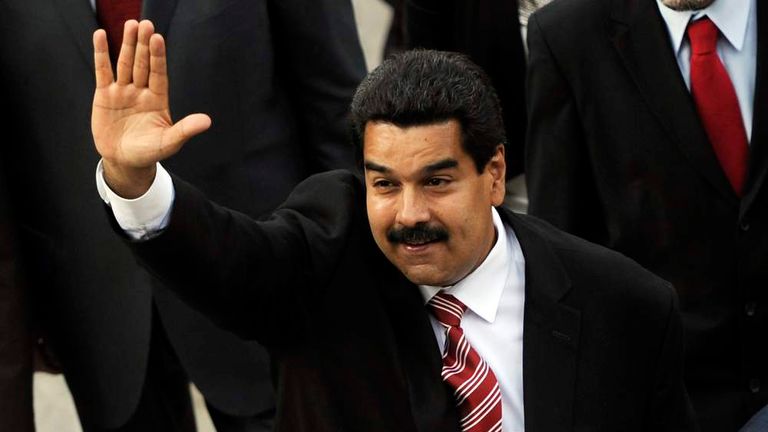
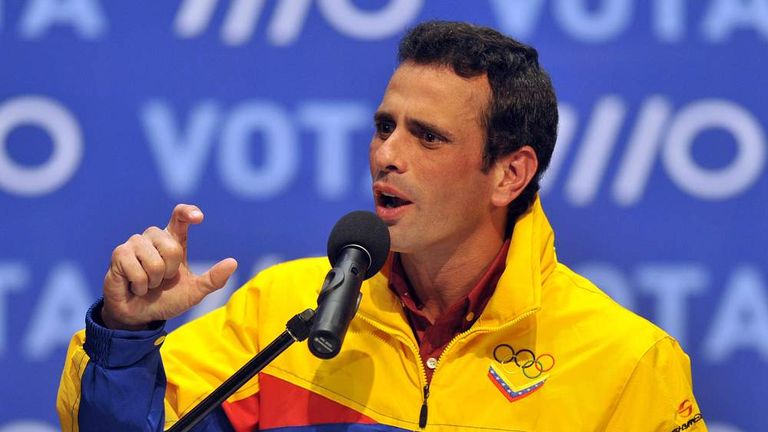
Presidential elections are to be held within 30 days and in the aftermath of the wave of emotion sweeping the country, Maduro is expected to be the ruling United Socialist Party of Venezuela (PSUV) candidate and to beat the probable choice of the opposition coalition - Henrique Capriles.
However, Maduro is no Chavez.

As a former bus driver he may have the working class credentials required of someone leading a movement which has transformed the lives of many ordinary Venezuelans, but he lacks both the charisma and oratory powers of Chavez. Maduro is also not as close to the army as was Chavez, a former paratrooper.
The ruling class in Venezuela has different strands with the biggest two factions being the army and the PSUV.
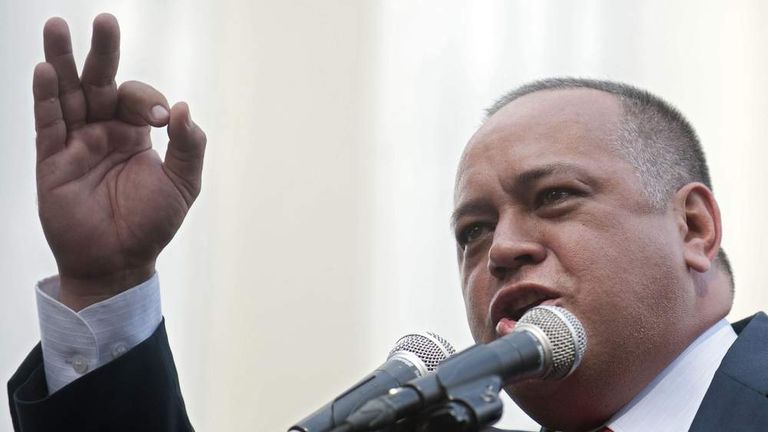
Behind the scenes the speaker of parliament, Diosdado Cabello, will have huge influence as he is the army's man in politics.
They may have to work together in a pragmatic manner if they want to safeguard the positive side of Chavez's legacy.
He alleviated poverty and social inequality to an extent no previous leader had come close to, nor it could be argued, had ever attempted. However, he also became increasingly authoritarian and was accused of misusing state funds and the state media to further his own career.
Despite Venezuela's oil wealth Chavez leaves behind a country riven with corruption, crime, and poverty.
He also bequeaths to his successor a political system which at the top depended on patronage and access to himself.
If Maduro is the next president he will almost certainly continue the Chavez policy of re-distribution, but the question remains whether he has the force of personality to hold together the top echelons.
Chavismo will probably survive in the short term, not least because the opposition remains divided. But what happens in the longer term is far less sure. This matters both to Venezuela but also to international relations.
Subsidised Venezuelan oil helps to prop up the Syrian and Cuban governments. Russia, Belarus, and Iran are allies.
If Chavismo is overturned, if Venezuela moves to a market economy and a pro-American foreign policy, it will have a knock on effect, especially on Cuba.