Brexit backstop: No 'fundamental' change in PM's breakthrough
Theresa May's revised backstop deal contains little that has changed, but it may be enough to win MPs' support, Faisal Islam says.

Tuesday 12 March 2019 11:03, UK
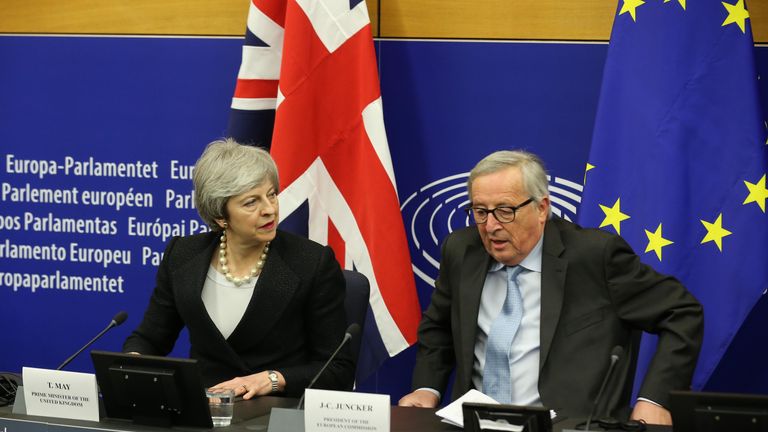
There were beaming smiles as the PM and entourage arrived at the European Parliament on the 11th hour dash to secure extra assurances over the Irish backstop. But when the PM emerged to face the press she was more stony-faced.
The most curious aspect of the subsequent deal announced was the "unilateral declaration" agreed by the UK and not objected to by the EU27 nations consulted by the EU's chief negotiator, Jean Claude Juncker.
The government interprets new assurances codified in a Joint Interpretative Instrument to be sufficient to declare that there is a way out of the backstop that can be triggered unilaterally.
On closer inspection however this declaration was that the UK could unilaterally "instigate measures" that would "ultimately lead to disapplication of obligations under the protocol"... under proviso that UK will uphold obligations under the 1998 [Good Friday/Belfast] Agreement in all its dimensions and under all circumstances to avoid hard border".
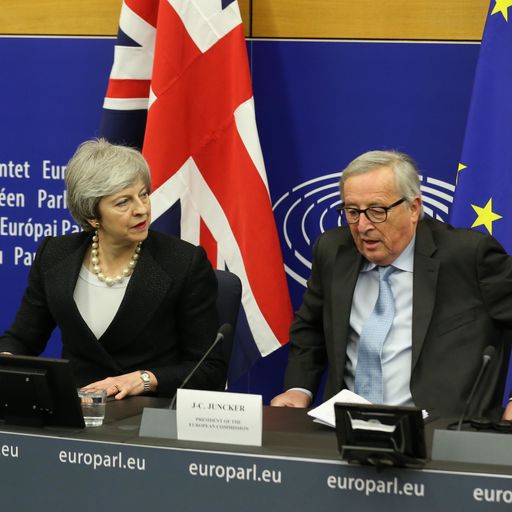
Furthermore the unilateral declaration acknowledges that any arbitration will be done in accordance with "Part Six Title III of the Withdrawal Agreement" - basically the existing dispute resolution mechanism, which contains a requirement to refer matters of EU law to the binding jurisdiction of the European Court of Justice.
If the chair of such a panel could not be agreed, it provides a mechanism to choose him or her by lottery.
In other words, this is neither a unilateral exit mechanism, nor a time limit.


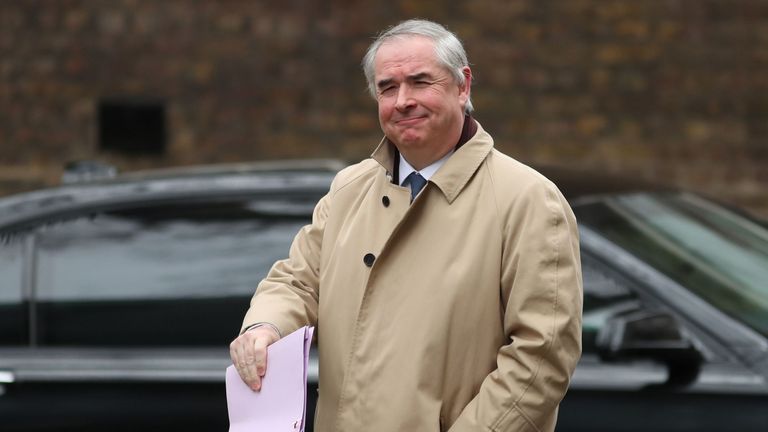
But perhaps it provides the Attorney General sufficient leeway to change his legal advice that the protocol (ie the backstop) will "endure indefinitely".
But that is a change of degree rather than something fundamental, a distinction underlined by the text of the meaningful vote motion which will be put to MPs later.
Paragraph three acknowledges that the five-page legally-binding joint instrument "reduces the risk the UK could be deliberately held in the Northern Ireland backstop indefinitely".
Theresa May is asking for her rebel MPs to acknowledge that is a risk, albeit a lower one than existed before the agreement.
The actual Withdrawal Agreement text has not changed.
EU sources acknowledged that the changes involve a beefed up review system, and an acknowledgement of technical border developments that could solve the NI border being part of the future relationship discussion.
Irish sources were unfazed: "We're happy that the Withdrawal Agreement (WA) is unchanged. Joint statement is a legal interpretation of what's in the WA (agreed by both sides). Irish govt is calm over these developments."
But it feels like more of a remix and clarification of existing assurances and arbitration mechanisms than anything radically new. Anyone persuaded to vote for this on the basis of these reassurances who voted against in January, was probably looking for a ladder to climb down.
If a largely unchanged Withdrawal Agreement passes after 105 days spent sitting on the shelf, then many dozens of MPs were not serious in their vote against to begin with.
All that uncertainty, all that investment in no-deal contingencies and some factory closures, too, would have occurred for little net gain.
Two other clarifications occurred last night.
Mr Juncker told my colleague Mark Stone that there would be no further negotiations and clarifications if MPs voted against it.
And in his letter to European Council President Donald Tusk he said that if the UK was still in the EU in late May, it would be obliged to take part in the EU elections.
The thumbscrews are now on the backbenchers, however.
Brexiteers have not rejected it out of hand. There were no pre-emptive queues of former cabinet ministers ready to trash the deal from the Commons lobby, before having read it, as occurred in November.
It provides hope for Downing Street, amid talk of a further meaningful vote three days before the Brexit due date. But the phrase "reduce the risk" may prove to be the key one.
Brexit Crisis Live: Watch Paste BN' special programme from 6pm as MPs vote on May's amended deal.